

What if your first step toward parenthood was defined by clinical data rather than uncertainty? For many expectant parents in Dubai, the transition from a home kit to a professional pregnancy blood test represents a critical shift from curiosity to medical certainty. It's natural to feel a sense of anxiety during these early stages. The confusion between different hCG markers and the physical exhaustion of early pregnancy can make the prospect of waiting in a clinic queue feel daunting. You're looking for more than a simple result; you need a reliable partner in your gestational health.
This article provides a comprehensive clinical reference to help you understand your results with confidence. We'll outline why blood screening is the gold standard for early confirmation, explaining how quantitative hCG levels offer a precise roadmap of your progress. You'll discover the significance of hormone thresholds, such as why a level above 25 mIU/mL is a definitive positive, and learn about the 72 hour doubling patterns that signal a healthy start. We'll also preview how mobile nursing services allow you to prioritize your wellness by accessing these vital diagnostics from the comfort of your home.
Key Takeaways
- Understand why serum analysis serves as the clinical gold standard for identifying pregnancy markers earlier than traditional home kits.
- Learn the distinction between qualitative confirmation and a quantitative pregnancy blood test that tracks specific Beta hCG progression.
- Determine the precise timing required to achieve maximum accuracy and avoid the clinical ambiguity of early false negatives.
- Prepare for a professional home sample collection with simple hydration steps and no requirement for traditional fasting.
- Discover how to transition from initial confirmation to a complete wellness strategy using DHA-standardized health checkup packs.
The Science of hCG: Why Blood Tests Are the Clinical Gold Standard
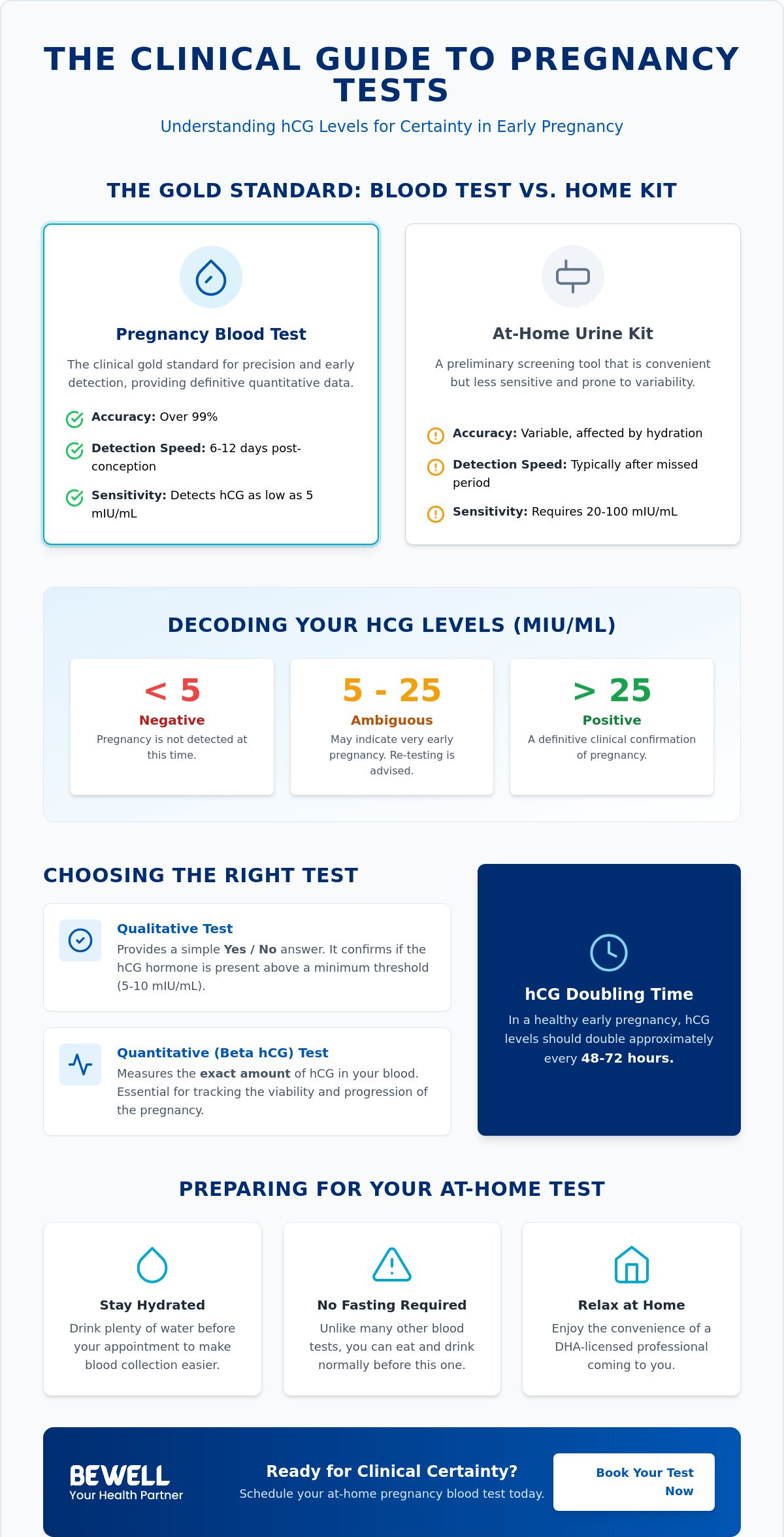
Human Chorionic Gonadotropin, commonly known as hCG, is the definitive biological marker for pregnancy. Produced by the cells that eventually form the placenta, this hormone enters the maternal bloodstream almost immediately after a fertilized egg attaches to the uterine lining. While home kits offer a preliminary indication, a professional pregnancy blood test provides a level of clinical precision that urine-based alternatives cannot match. Clinicians recognize the two primary methods of pregnancy tests as urine-based qualitative analysis and serum-based quantitative analysis, yet blood screening remains the superior diagnostic tool. It achieves over 99% accuracy by detecting the hormone directly in the circulatory system, where concentrations are more stable and less susceptible to external variables.
Establishing a baseline hCG level during your first clinical screening is essential for effective prenatal monitoring. This initial data point serves as a reference for all subsequent tests, allowing your healthcare provider to track the progression of the pregnancy with mathematical accuracy. Because blood tests measure the exact concentration of the hormone in milli-international units per milliliter (mIU/mL), they offer a clear picture of gestational development. This quantitative approach is particularly vital for identifying potential complications early or confirming viability when other symptoms may be ambiguous.
How hCG Functions in the First Trimester
During the early weeks of gestation, hCG performs the critical role of maintaining the corpus luteum. This temporary endocrine structure is responsible for producing progesterone, the hormone that sustains the uterine lining and prevents menstruation. Hormone levels begin to rise rapidly after implantation, which typically occurs 6 to 12 days after conception. hCG is the primary chemical messenger that signals the body to pause the menstrual cycle. By the time you reach your expected period, a pregnancy blood test can already provide a definitive confirmation of these physiological changes.
The Limitations of At-Home Urine Tests
At-home kits are often limited by high detection thresholds, usually requiring hCG concentrations between 20 and 100 mIU/mL to trigger a positive result. This delay can lead to unnecessary anxiety during the "two-week wait." Additionally, urine tests are highly sensitive to hydration levels; consuming a large amount of water can dilute the sample and cause a false negative. In the professional landscape of Dubai, DHA-licensed professionals prioritize blood-based diagnostics because they eliminate these variables. Serum testing identifies the presence of hCG at much lower concentrations, often as low as 5 mIU/mL, providing answers days before a urine test would register a change.
Qualitative vs. Quantitative hCG: Decoding Your Results
Not all blood screenings are identical. When you book a pregnancy blood test, you'll typically choose between qualitative and quantitative hCG blood tests. Qualitative testing acts as a definitive yes or no confirmation. It's highly sensitive, detecting hormone levels as low as 5 to 10 mIU/mL, but it doesn't provide a specific numerical value. This is often sufficient for initial confirmation if you have no underlying health concerns or history of complications.
Quantitative testing, frequently called the Beta hCG test, measures the exact concentration of the hormone in your blood. This data allows clinicians to monitor the viability of the pregnancy with high precision. One of the most important metrics in early gestation is the "doubling time." In a healthy early pregnancy, hCG levels should ideally progress every 48 to 72 hours. If levels fail to rise at this rate, it provides an early clinical signal that requires further investigation by your healthcare provider. Monitoring these trends is a standard part of proactive wellness.
When to Choose a Quantitative Beta hCG Test
Quantitative data is indispensable for parents with a history of miscarriage or high-risk factors. It's the primary tool for monitoring potential ectopic pregnancies, where hCG levels might rise more slowly or plateau. Because these tests are so precise, they also assist in dating the pregnancy during the first few weeks before an ultrasound can provide a clear image. If you're seeking this level of detail, you can easily schedule these blood tests for home collection to avoid clinic queues while feeling unwell.
Reference Ranges: What the Numbers Mean
Understanding your results requires looking at broad clinical ranges. While a level above 25 mIU/mL is considered a definitive positive, the "normal" window for any given week is vast. Results between 6 and 24 mIU/mL often fall into a grey area that necessitates a retest to confirm a rising trend. Typical ranges by weeks from your last menstrual period (LMP) include:
- 3 weeks LMP: 5 – 50 mIU/mL
- 4 weeks LMP: 5 – 426 mIU/mL
- 5 weeks LMP: 18 – 7,340 mIU/mL
- 6 weeks LMP: 1,080 – 56,500 mIU/mL
Don't fixate on a single number. A single data point is less significant than the overall trend. For instance, exceptionally high levels might indicate multiples, such as twins or triplets, rather than an incorrect date. Always review your results with a professional to ensure they align with your specific clinical history and gestational timeline. This composed approach ensures you remain a stable partner in your own health management.
Timing and Accuracy: When to Book Your Pregnancy Blood Test
Clinical precision depends on physiological timing. While a pregnancy blood test is significantly more sensitive than urine alternatives, biology requires a specific window for hormone production. Implantation typically occurs 6 to 12 days after conception. Attempting to test before this event will result in a negative finding, as the placenta has not yet begun secreting hCG into the bloodstream. This period, often called the "two-week wait," requires patience to ensure the results reflect your actual status. Testing too early can lead to a false negative even with blood tests, as the hormone concentration may not yet have reached the detectable 5 mIU/mL threshold.
Early detection is generally possible between 7 and 10 days after conception. This represents a significant advantage over the accuracy of home pregnancy tests, which often require a higher concentration of hCG only found closer to a missed period. For the most definitive baseline, clinicians recommend waiting until the first day of your missed cycle. This ensures that the hormone concentration is high enough to provide a clear quantitative value rather than a borderline result that might require repeated testing. Certain factors, such as the timing of ovulation and the specific sensitivity of the lab equipment, will influence the clarity of these early results.
The Impact of IVF and Fertility Treatments
Fertility protocols often involve "trigger shots" that contain synthetic hCG to induce ovulation. If you test too soon after these injections, the pregnancy blood test may detect the medication rather than a developing pregnancy, leading to a false positive result. It's essential to follow the specific clinical schedule provided by your fertility specialists in the UAE to avoid this confusion. For IVF patients, the "Beta Day" is the strictly scheduled blood test date. Adhering to this timeline ensures that the recorded levels represent endogenous hormone production and provide a reliable indicator of success.
Early Pregnancy Symptoms vs. Clinical Testing
Physical changes often prompt the initial desire for testing. Common early signs include:
- Persistent fatigue and lethargy
- Nausea or heightened sensitivity to smells
- Breast tenderness or swelling
- Mild cramping or spotting
While these indicators are common, they are subjective and can mimic other hormonal shifts. They are not substitutes for a professional blood test home service. Clinical confirmation provides the psychological certainty needed to begin your prenatal journey. Moving from speculative symptoms to a verified medical record allows you to plan your next steps with a composed and informed mindset.
Preparing for Your Home Blood Collection in Dubai
Accessing a pregnancy blood test through home collection offers a streamlined alternative to traditional clinic visits. This method prioritizes your comfort and efficiency, especially during the early weeks when morning sickness or fatigue may be present. Preparation for this specific diagnostic is straightforward. Unlike many comprehensive health checkup packs, a Beta hCG test doesn't require fasting. You can eat and drink normally before your appointment without affecting the accuracy of the hormone measurement. This flexibility allows you to schedule your collection at any time of day that suits your routine.
Hydration remains the primary factor for a successful sample collection. Consuming adequate water in the hours leading up to your nursing visit increases blood volume and improves vein visibility. This makes the venipuncture process more efficient for the professional and minimizes any potential discomfort. By opting for a home service, you also benefit from total privacy. Your clinical data and pregnancy status remain within a secure, professional circle, allowing you to receive results in a familiar and stress-free environment.
The Home Collection Process Step-by-Step
A DHA-licensed nurse arrives at your preferred location at the scheduled time. The process begins with a formal verification of your identification to ensure medical record accuracy. The blood draw is quick, sterile, and conducted with the same clinical rigor found in a hospital setting. Once the sample is secured, it's prepared for transportation. Maintaining a strict cold chain is essential; the sample is moved in temperature-controlled containers to a certified laboratory to protect the integrity of the hCG markers for precise analysis.
Next Steps After Receiving Your Results
Once you receive your lab report, review the quantitative values carefully. A standard result will align with the gestational ranges previously discussed, but any result that feels ambiguous should be reviewed by a specialist. It's vital to share these results with your OBGYN to establish a formal prenatal plan. As your pregnancy progresses past the tenth week, you can transition to more advanced screening, such as the NIPT test in Dubai, which provides detailed chromosomal insights. To begin your journey with clinical certainty, you can schedule a blood test for home collection today and avoid the wait at a traditional facility.
Comprehensive Prenatal Wellness with Bewell
A pregnancy blood test serves as the clinical foundation for your prenatal journey, but it's only the first step in a broader health management strategy. We believe that medical confirmation should be integrated with proactive wellness. Our approach combines DHA-standardized home care with the sophisticated analysis required for long-term health monitoring. By choosing a partner that prioritizes clinical excellence, you ensure that every data point, from your initial hCG markers to later genetic screenings, is handled with meticulous standards. This integrated model reduces the stress of coordinating multiple clinic visits while you're focused on your physical well-being.
Personalized support is at the core of our service model. We act as a knowledgeable health concierge, guiding you through the transition from early hormone detection to comprehensive maternal health assessments. Our nursing team provides more than just sample collection. They offer a bridge between complex laboratory processes and your daily convenience. This ensures that your prenatal care is both high-standard and highly efficient, allowing you to maintain your routine while receiving premium medical oversight.
Transitioning to Genetic Screening
Once you have established a stable hCG progression, your clinical focus will naturally shift toward chromosomal health. Understanding the nipt test cost and its diagnostic value is essential as you reach the ten-week milestone. Non-Invasive Prenatal Testing (NIPT) is a sophisticated screening tool that analyzes fetal DNA present in the maternal bloodstream. Your early pregnancy blood test results provide the necessary context for these later assessments. By maintaining a consistent record of blood markers, you and your healthcare provider can build a detailed roadmap of your pregnancy's development from the very beginning.
Holistic Health for Expectant Mothers
Maternal wellness requires monitoring more than just pregnancy hormones. Fetal development draws heavily on your internal resources, often impacting your own nutrient levels. Utilizing professional health checkup packages dubai allows you to track essential markers like iron, ferritin, and vitamin D. Maintaining these levels is vital for preventing fatigue and supporting healthy growth. Precision matters here. If you experience severe morning sickness, also known as hyperemesis gravidarum, our nursing at home service can provide IV drips to assist with hydration and electrolyte recovery. This ensures you remain stable and resilient throughout the first trimester. Book your professional at-home pregnancy blood test today to begin your journey with clinical certainty.
Securing Your Clinical Roadmap to Parenthood
Your transition into parenthood deserves the highest standards of medical precision. By identifying the specific quantitative markers discussed in this guide, you can move past the limitations of home kits and embrace a data-driven approach to your health. A professional pregnancy blood test remains the most reliable method to confirm viability and track hormone progression with clinical-grade laboratory accuracy. This foundational data allows you and your healthcare provider to plan your next steps with confidence and composure.
Accessing these essential diagnostics shouldn't be a source of physical or logistical stress. Our service model brings the laboratory to you, utilizing DHA-licensed professional nurses to ensure the highest standards of care. You'll benefit from discreet and comfortable home collection in Dubai, allowing you to prioritize your wellness without the inconvenience of clinic queues. Book Your Professional At-Home Pregnancy Blood Test with Bewell to receive the clinical clarity you require. We are here to serve as your reliable partner in sophisticated health management.
Frequently Asked Questions
How soon can a pregnancy blood test detect pregnancy after conception?
A pregnancy blood test can detect the hCG hormone as early as 7 to 10 days after conception. This timeline is several days before most home kits can provide a reliable result. Because blood tests identify the hormone directly in the bloodstream, they capture the initial rise immediately following implantation. Testing during this window provides the earliest possible clinical confirmation of your status.
Is a blood test more accurate than a home pregnancy test?
Clinical blood tests are considered the gold standard because they offer over 99% accuracy. Unlike home urine tests, which are susceptible to hydration levels and have higher detection thresholds, serum analysis measures hormone concentrations directly. This clinical precision eliminates the ambiguity often associated with faint lines on home kits. It ensures a definitive result even in the earliest stages of gestation.
Do I need to fast before a pregnancy blood test?
You don't need to fast before a pregnancy blood test. The concentration of hCG in your blood remains stable regardless of your caloric intake or the timing of your last meal. You can proceed with your collection at any time of the day. Maintaining proper hydration is actually more beneficial than fasting, as it assists the nurse in performing a smooth venipuncture.
What is a "normal" Beta hCG level for 4 weeks of pregnancy?
At four weeks from your last menstrual period, a typical Beta hCG range is between 5 and 426 mIU/mL. It's important to remember that these clinical ranges are exceptionally broad. A single numerical value is less significant than the rate at which the levels increase. Your healthcare provider will look for a doubling pattern every 48 to 72 hours to confirm a healthy progression.
Can a pregnancy blood test be wrong?
While extremely rare, a blood test can yield a misleading result if the timing is incorrect. Testing too early, before implantation has fully occurred, may result in a false negative. Conversely, certain fertility medications containing hCG can cause a false positive. These occurrences are clinical exceptions rather than the rule. Following a professional testing schedule minimizes these risks and ensures high diagnostic integrity.
How long does it take to get pregnancy blood test results in Dubai?
Most professional laboratories in Dubai provide results within 12 to 24 hours of sample collection. If you utilize a home nursing service, the sample is transported in a temperature-controlled environment directly to the lab for immediate processing. You'll typically receive a digital report via email or a secure portal. This fast turnaround allows you to begin your prenatal planning without unnecessary delays.
What is the difference between a qualitative and quantitative hCG test?
A qualitative test provides a simple "positive" or "negative" result by detecting the presence of hCG above a certain threshold. In contrast, a quantitative test, or Beta hCG, measures the exact concentration of the hormone in your blood. This numerical data is essential for tracking the health of the pregnancy. It allows clinicians to monitor doubling times and identify potential complications early in the first trimester.
Can certain medications cause a false positive on a pregnancy blood test?
Specific fertility medications, particularly "trigger shots" used in IVF treatments, can cause a false positive. These injections contain synthetic hCG that can remain in your system for several days. Most other common medications, including antibiotics or birth control pills, don't interfere with the accuracy of the pregnancy blood test. Always inform your nurse about any ongoing fertility treatments to ensure the results are interpreted correctly.


