
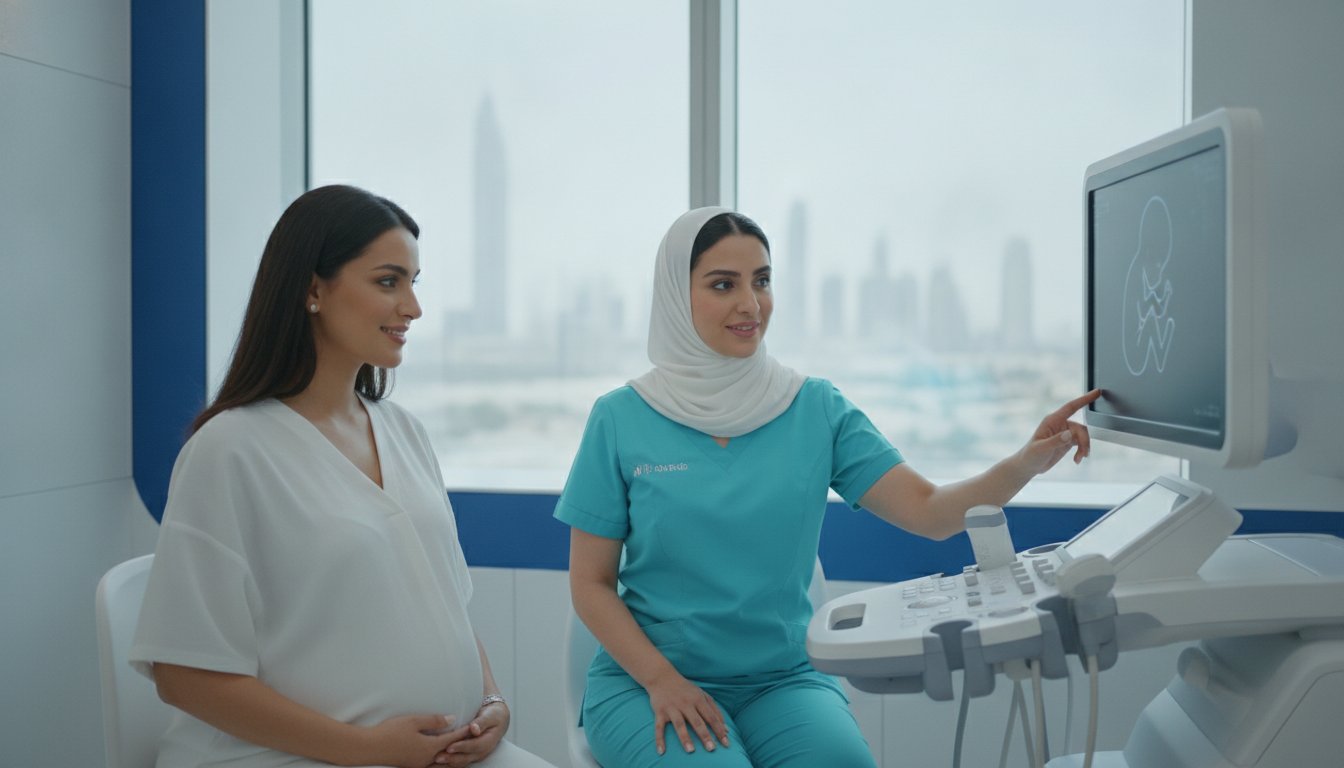
What if your first major ultrasound could provide more than just a blurry photo for the fridge, but a clear roadmap for your baby's health? It's natural to feel a wave of anxiety when your doctor mentions the nt scan, especially with so much conflicting information available. This screening is a standard, essential part of prenatal care in the UAE. It's designed to offer a proactive look at your baby's development during those crucial early weeks, helping to identify potential chromosomal risks with professional precision.
We know you want to make the most informed choices for your family, yet the technical jargon often makes things more stressful than they need to be. You are likely wondering if this test is enough or if you should also consider other options like the NIPT. This guide promises to demystify the entire process, from understanding what the measurements actually signify to knowing the optimal timing for your appointment between 11 and 14 weeks. We will compare different screening methods available in Dubai and provide a clear path so you can approach your first trimester with confidence and calm.
Key Takeaways
- Understand that an nt scan is a non-invasive screening used to calculate risk levels rather than providing a definitive yes or no answer.
- Discover how the "Combined Test" uses blood markers like hCG and PAPP-A to create a more comprehensive health profile for your baby.
- Compare the accuracy rates of standard scans versus NIPT to help you decide which path feels right for your family's peace of mind.
- Identify the critical "Golden Window" for your appointment to ensure your measurements are taken while they are most accurate.
- Explore how holistic health checkup packages can monitor your maternal well-being throughout every stage of your pregnancy journey.
What is an NT Scan and Why is it Performed?
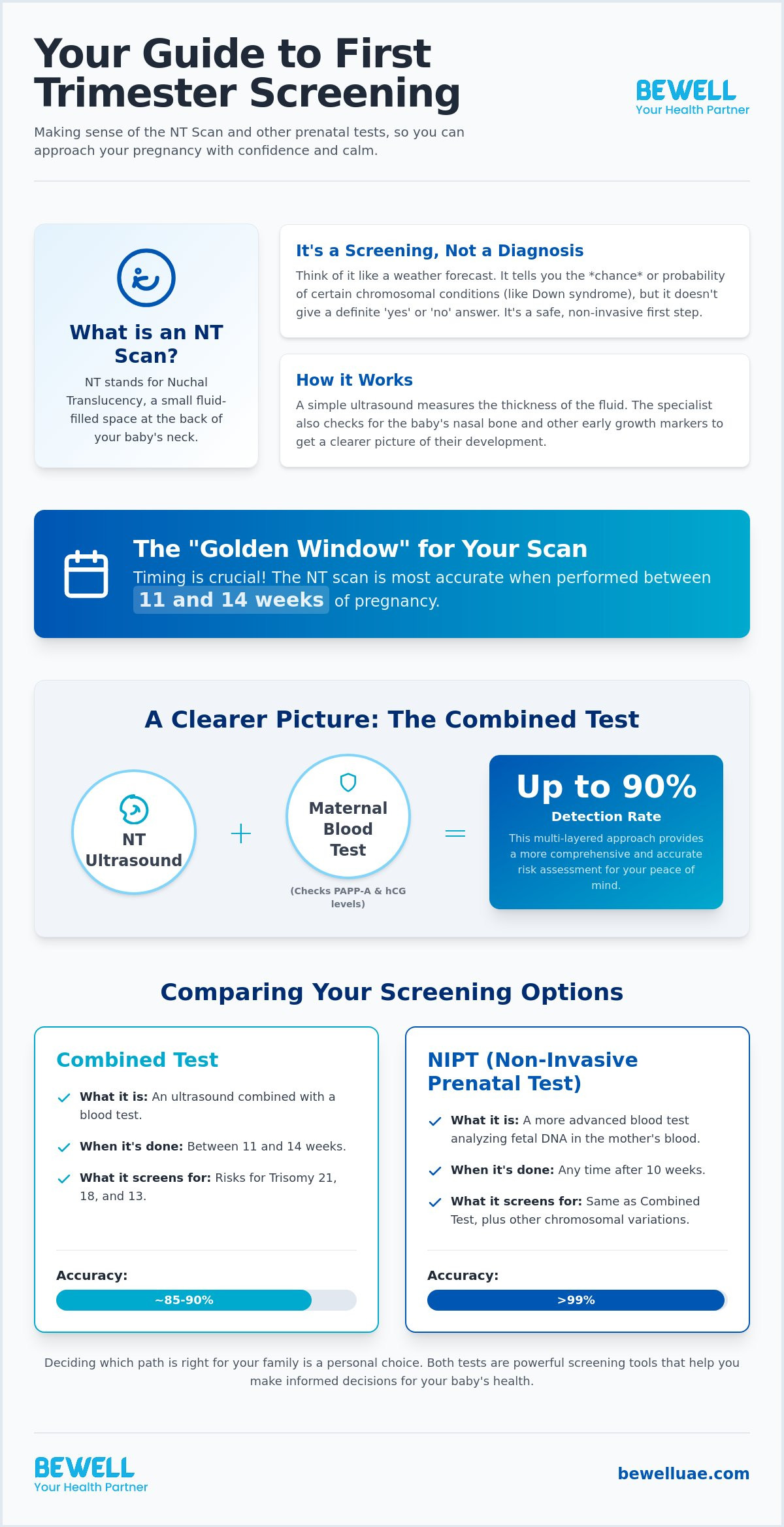
The nt scan is often your first deep dive into your baby's health. It stands for Nuchal Translucency, which is a clinical way of describing the small, fluid-filled space at the back of your baby's neck. While the name might sound complex, the process is quite simple. It's a non-invasive ultrasound performed during your first trimester to check on early development. You'll likely see this scheduled between your 11th and 14th week of pregnancy.
You should keep in mind that this is a screening test, not a diagnostic one. This means it doesn't give you a definitive "yes" or "no" answer about your baby's health. Instead, it calculates the statistical probability of certain chromosomal conditions. Specifically, it looks for markers related to Trisomy 21 (Down syndrome), Trisomy 18 (Edwards syndrome), and Trisomy 13 (Patau syndrome). Seeing fluid on the screen during the ultrasound is actually a good thing. Every developing baby has this fluid; the goal is simply to measure its depth to ensure it falls within an expected range.
The Science Behind the Measurement
The thickness of this fluid serves as a key indicator for healthcare providers. When the measurement is higher than the standard threshold, it might suggest an increased risk for chromosomal conditions or certain heart defects. During the appointment, the sonographer works carefully to get a perfect "profile view" of the baby. This specific angle is essential for an accurate reading. A comprehensive Nuchal scan does more than just measure one spot. The specialist also checks for the presence of the nasal bone and looks at the development of the limbs and the heart rate. These observations, combined with the fluid measurement, provide a clearer picture of your baby's early growth and wellness.
Screening vs. Diagnostic Testing
Think of the difference between screening and diagnostic testing like a weather forecast. A screening test, like the nt scan, tells you the "chance of rain." If your results show a risk ratio of 1 in 5,000, it's like a 1% chance of a storm. It doesn't mean it will definitely rain, but it helps you decide if you need to carry an umbrella or seek more information. In contrast, diagnostic tests like Amniocentesis or Chorionic Villus Sampling (CVS) provide a certain diagnosis by looking directly at fetal cells. Most parents in the UAE start with a screening because it's completely safe and provides significant peace of mind without the risks associated with more invasive procedures. It's a proactive step in managing your pregnancy with clinical precision.
The Combined Test: How Ultrasound and Blood Markers Work Together
While the ultrasound is a vital visual tool, the nt scan is rarely used in isolation. To get the most reliable results, doctors in Dubai typically recommend what's known as the "Combined Test." This approach pairs your ultrasound with a specialized pregnancy blood test. By evaluating the fluid measurement alongside specific biochemical markers in your blood, the screening provides a much clearer view of your baby's health. It's a proactive way to manage your pregnancy with clinical precision and organized care.
This multi-layered assessment is significantly more accurate than using the ultrasound alone. When clinicians combine the Nuchal translucency (NT) test data with blood work and maternal age, the detection rate for common chromosomal conditions rises to approximately 85% to 90%. It's a gold-standard approach that offers parents a high level of reassurance early in their journey. If you're already planning your first trimester milestones, you might consider starting with a baseline pregnancy blood test to ensure your health markers are exactly where they need to be for a healthy pregnancy.
Understanding PAPP-A and hCG
The blood portion of the screening focuses on two primary markers. The first is PAPP-A, or Pregnancy-associated plasma protein A, which is a protein produced by the placenta. We look for specific levels because lower-than-average amounts can sometimes be associated with chromosomal variations. They can also provide early clues about placental health later in the pregnancy. The second marker is hCG, the well-known "pregnancy hormone." Its levels naturally fluctuate throughout the first few months as your body supports the growing fetus. It's vital to remember that "abnormal" levels don't automatically mean there's a problem with the baby. Many healthy pregnancies show variations in these markers, which is why we look at the whole picture rather than just one number.
Factors That Influence Your Results
Your final risk ratio isn't just based on your baby's measurements. Maternal age plays a significant role in the software's calculation, as the baseline probability for certain conditions changes naturally over time. Other factors like smoking habits, whether the pregnancy was conceived via IVF, or if you're expecting twins are also carefully factored into the final report. Clinics across the UAE utilize standardized software, often following the strict guidelines of the Fetal Medicine Foundation, to ensure your results meet international benchmarks for accuracy. This structured approach helps transform complex biological data into actionable information you can trust. It's all about providing a stable foundation for your personal health management during this exciting time.
NT Scan vs. NIPT: Which One Should You Choose?
Choosing between these tests doesn't have to be a headache. It's really about what information you want and when you want it. While the nt scan has been the standard for years, many parents now opt for NIPT, or Non-Invasive Prenatal Testing. This newer method is a sophisticated blood test that analyzes fragments of your baby's DNA circulating in your blood. It offers a higher detection rate for common trisomies like Down syndrome, often exceeding 99% accuracy. In comparison, the standard combined screening typically catches about 85% to 90% of cases.
However, the nt scan still holds a unique value that a blood test simply can't match. It provides a visual look at your baby's physical development. Think of it as two different lenses. NIPT looks at the genetic code, while the ultrasound looks at the physical manifestation of that code. Many families find that using both tests provides the most comprehensive peace of mind during the first trimester. Let's look at how they stack up side-by-side:
| Feature | NT Scan | NIPT |
|---|---|---|
| Method | Ultrasound + Blood Marker | Simple Blood Draw |
| Optimal Timing | 11 to 13 weeks + 6 days | From 10 weeks onwards |
| What it Detects | Physical & Chromosomal Risk | Chromosomal DNA Markers |
| Accuracy (T21) | Approximately 85-90% | Greater than 99% |
The Benefits of NIPT
One of the biggest draws for NIPT is the timing. You can have this test done as early as 10 weeks, which is often before your first major ultrasound. It's incredibly convenient for those who want answers quickly. Plus, NIPT has the added bonus of being able to determine the baby's sex with very high accuracy. If you're looking for a deep dive into how to access this, check out our NIPT test in Dubai guide for everything you need to know about the process.
Why Doctors Often Recommend Both
You might wonder why you'd bother with an ultrasound if the DNA test is so accurate. The reason is simple: NIPT only looks at chromosomes. It cannot see physical issues like heart defects, abdominal wall problems, or limb abnormalities. The nt scan is a structural checkup that ensures the baby's physical anatomy is developing as expected. When balancing your budget, the NIPT test cost is naturally higher than a standard scan, so many parents in the UAE choose to combine them for a "best of both worlds" approach to prenatal wellness.
Timing and Preparation: What to Expect at Your Appointment
Timing is everything for your first trimester care. The nt scan has a very specific "Golden Window" that you cannot miss. You must schedule this appointment between 11 weeks and 13 weeks 6 days of your pregnancy. This isn't just a suggestion; it's a physiological requirement. Once you hit the 14-week mark, the nuchal fluid at the back of the neck is absorbed into the baby's developing lymphatic system. After this point, it's impossible to get an accurate measurement for screening purposes. Being proactive about your booking ensures you don't miss this critical window for insight.
When you arrive for your appointment, the process is straightforward and methodical. A sonographer will apply a cool, water-based gel to your lower abdomen to help the sound waves travel. They'll use a handheld device called a transducer to create a real-time image of your baby on the monitor. Most parents find this to be a highlight of their early pregnancy journey as they see their baby's movements for the first time. If your baby is tucked away or in a difficult position, the specialist might suggest a transvaginal scan. This involves a smaller probe and often provides the high-definition view needed for a precise measurement.
How to Prepare for the Scan
To make the experience as smooth as possible, wear a comfortable two-piece outfit. This allows the sonographer easy access to your abdomen without you needing to change into a medical gown. You'll also likely be asked to arrive with a full bladder. Drinking several glasses of water an hour before your appointment helps push your uterus higher into the pelvis, which significantly improves the clarity of the ultrasound image. While you don't usually need to fast for an nt scan, you should check if you're having other markers checked on the same day. If you're coordinating multiple screenings, you can book your comprehensive blood tests through our portal to keep your health management organized and efficient.
Understanding the Numbers
During the scan, the sonographer focuses on measuring the depth of the nuchal fluid. While every baby is different, a measurement under 3mm is generally considered within the standard range for a healthy pregnancy. However, keep in mind that this number is just one part of a larger statistical calculation. If your result indicates a "high risk," it isn't a definitive diagnosis. It simply serves as a reason to have a more detailed conversation with a specialist about further diagnostic options. We always encourage parents to ask for a printed copy of the clinical report and a photo of the baby to keep for their records. Having this documentation helps you maintain a clear and organized history of your prenatal journey.
Comprehensive Prenatal Wellness with Bewell
Getting through your first trimester involves more than just checking off your nt scan dates. It's about setting a solid foundation for your health and your baby's growth. At Bewell, we see ourselves as your dedicated partner through this whole experience. We bridge the gap between complex medical requirements and the convenience your daily life needs. Our approach focuses on clinical expertise paired with proactive wellness, so you always feel supported rather than just managed by a system.
Our health checkup packages are built to keep a close eye on your maternal health at every step. We know that heading to a clinic can be a lot to handle, especially when you're dealing with early pregnancy fatigue or nausea. That's why we focus on at-home services. You can book professional nursing at home and at-home blood draws for your routine screenings. These services ensure you get DHA-certified care without having to deal with Dubai traffic or long waits in a lounge. It's a modern, efficient way to handle your prenatal needs with clinical precision.
Supporting Your Body During Pregnancy
Keeping your hydration and nutrition on track is vital during these first few months. If it's medically appropriate for you, our IV DRIPS & INJ can help support your wellness by delivering the fluids and nutrients your body needs. We also make it easy to follow up on your health after that initial nt scan. You can schedule at-home blood tests to check on things like iron levels or glucose whenever you need. On top of that, our partnership programs mean you have a clear path to the most respected fetal medicine specialists in Dubai, making the transition from screening to specialist care feel completely seamless.
Peace of Mind for UAE Parents
We work as your personal health concierge. Our team is here to help you make sense of the complex world of prenatal screenings, from chromosomal risks to physical anatomy checks. By staying proactive with your health management, you're creating a much smoother, low-stress pregnancy experience for yourself and your family. We take care of the logistics so you can focus on the joy of your growing family. We'd love for you to book your prenatal wellness consultation with Bewell today and see how organized and sophisticated your personal health care can be.
Empower Your Pregnancy with Proactive Care
Your first trimester is a time of incredible change, and having a clear health strategy makes all the difference. Remember that the nt scan is your essential structural window, providing vital insights between weeks 11 and 14. Whether you choose a combined screening or opt for the high accuracy of NIPT, these tests offer the data you need to move forward with confidence and peace of mind.
Managing these milestones shouldn't feel like a full-time job. We specialize in making your healthcare journey seamless through DHA and MOH certified services. By utilizing expert nursing care at home and our network of advanced clinical diagnostic partners across the UAE, we bring the clinic to you. This organized approach lets you focus on your well-being while we handle the complex technical details. It's about providing you with a stable, reliable foundation during these early weeks.
Ready to start your journey with a partner you can trust? Explore our Prenatal Wellness and Diagnostic Services today. We're here to ensure you and your baby have the best possible start to this exciting new chapter.
Frequently Asked Questions
Is the NT scan safe for my baby?
Yes, an nt scan is completely safe for both you and your baby. It uses standard ultrasound technology, which relies on sound waves rather than radiation to create images. This non-invasive procedure has been used for decades in prenatal care without any known risks to fetal development. It's a proactive way to check on your baby's health while maintaining the highest standards of safety and clinical professionalism.
What happens if my NT scan shows a high-risk result?
A high-risk result isn't a diagnosis, but rather a prompt for further discussion with your healthcare provider. If your screening indicates a higher probability of chromosomal conditions, your doctor will likely suggest more definitive tests. This could include a highly accurate NIPT blood test or diagnostic procedures like Amniocentesis. These steps are designed to give you a clearer understanding and help you plan your next steps with calm efficiency.
Can the NT scan tell me the gender of my baby?
How long does it take to get the results of an NT scan in Dubai?
You will often receive the visual results of your ultrasound immediately during your appointment. However, if you are doing the combined screening, the final risk calculation depends on your blood marker results. In Dubai, these laboratory reports typically take between three to five working days to process. Once all the data is ready, your doctor will provide a comprehensive report that combines the scan and blood work findings for a complete assessment.
Do I need to fast before my NT scan and blood test?
You don't need to fast before your scan or the associated blood marker tests. Unlike some routine health checkups, the markers measured for this screening aren't affected by your recent meals. In fact, having a light snack before your appointment might even help the baby be more active during the ultrasound. Just remember to follow the full bladder rule to ensure the sonographer can capture the clearest possible images for an accurate measurement.
Is the NT scan covered by health insurance in the UAE?
Most comprehensive maternity insurance plans in the UAE cover the nt scan as it is a standard part of prenatal care. Since the Dubai Health Authority (DHA) includes this screening in its recommended protocols, many providers categorize it as a necessary medical service. However, coverage limits and co-payments vary significantly between policies. It's always best to check with your insurance provider or the clinic's billing department to confirm your specific benefits before your visit.
What is the difference between an NT scan and an anomaly scan?
The main differences are the timing and what the specialist is looking for during the procedure. The nt scan happens in the first trimester to assess chromosomal risk. The anomaly scan, also known as the mid-pregnancy scan, takes place later between 18 and 22 weeks. This second scan is a much more detailed structural check that examines your baby's organs, limbs, and overall physical development from head to toe to ensure everything is growing correctly.
Can I skip the NT scan if I am under 35?
While the decision is ultimately yours, healthcare providers in the UAE recommend this screening for all expectant parents regardless of age. Although the statistical risk for chromosomal conditions is lower for those under 35, it isn't zero. Taking this proactive step provides a vital baseline for your baby's health. It ensures you're following the high standard of care recommended by regional health authorities for a smooth and well-monitored pregnancy journey.


